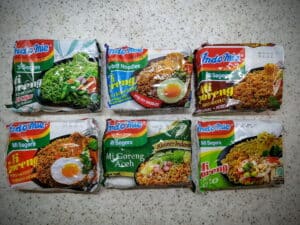
There is a question worth sitting with before reading this blog. If a contamination report landed on your desk tomorrow morning, how far back could you trace the ingredient in question, and how quickly could you pull the affected batches from your distribution network?
For most Nigerian food businesses, that question does not have a clean answer. The records are incomplete, the supplier documentation is informal, and the distribution network operates on relationships rather than systems. That is not a criticism. It is simply the operating reality for a large number of food businesses across Nigeria today.
In April 2004, that question became very real for one of Nigeria’s most recognised food brands. NAFDAC announced that three batches of Indomie noodles had been contaminated with carbofuran, a pesticide used in agriculture and not in food production. Two factories were shut down. Schools stopped serving the product. Parents pulled it from their kitchens.
In this blog, I will walk you through what the operational record of that crisis shows, the three food safety lessons every Nigerian food business should take from it, and how FSSC 22000 provides the management framework that addresses each lesson directly. If your business produces, processes, or distributes food in Nigeria, this is worth reading carefully.
Key Points
- In April 2004, NAFDAC announced that three batches of Indomie noodles manufactured between March 30 and April 4 of that year had been contaminated with carbofuran, a pesticide not used in food production.
- The Dufil Prima Foods factory in Ota, Ogun State and the company’s plant in Port Harcourt were both shut down pending investigation.
- The company conducted its own laboratory investigation in parallel with NAFDAC’s, withdrew the contaminated batches through its distribution network, and cooperated fully with the shutdown directive.
- The ability to identify the specific batches affected and trace the possible entry point of the contamination pointed to a level of operational structure that shaped how the response unfolded.
- Today, FSSC 22000 defines what a structured food safety management system should look like for food businesses globally, and it is increasingly required by multinational food companies and export markets as a condition of supplier qualification.
- Many Nigerian food businesses, if a contamination report arrived tomorrow, would not have the traceability records, supplier documentation, or crisis response protocols needed to manage that situation at the same level.
What Happened to Indomie in Nigeria in 2004
Every long-running food brand has a moment that decides whether it stays around or quietly disappears. For Indomie in Nigeria, that moment came in April 2004.
Indomie was first introduced to Nigeria in the 1980s, when instant noodles were not yet part of how Nigerian families ate. The product took time to find its place, but the company stayed with it. Through the late 1990s and early 2000s, Indomie grew into the market leader in Nigerian instant noodles, the kind of brand that ends up in lunchboxes, hostel rooms, and family kitchens across the country.
Then came the test.
In April 2004, NAFDAC announced that three batches of Indomie noodles, manufactured between March 30 and April 4 of that year, had been contaminated with carbofuran, a pesticide used in agriculture and not in food production. The agency moved quickly. Two factories were shut down pending investigation. Reports of possible illness circulated in Lagos. Schools stopped serving the product. Many parents banned it from their kitchens entirely.
For a brand that had spent more than a decade building trust in a country that had only recently embraced instant noodles, this was the kind of moment that can seriously damage a business.
The company conducted its own laboratory investigation in parallel with NAFDAC. It complied with the factory shutdown directive and withdrew the contaminated batches from the market through its distribution network. The investigation focused on tracing how the carbofuran may have entered the supply chain rather than the production line.
Trust came back slowly. The brand is still on Nigerian dinner tables today.
Who Manufactures Indomie in Nigeria?
Indomie in Nigeria is manufactured by Dufil Prima Foods Plc, formerly known as De-United Foods Industries Limited. The company is a subsidiary of Tolaram Group, a Singapore-based multinational conglomerate with significant operations across Africa. Dufil Prima Foods is one of the largest food manufacturing companies in Nigeria and operates multiple production facilities across the country.
Where Is Indomie Made in Nigeria?
Dufil Prima Foods operates manufacturing facilities in several locations across Nigeria. The primary production facility is located in Ota, Ogun State, which opened in 1995 as the first instant noodle factory in Nigeria and grew into one of the largest instant noodle manufacturing operations on the continent. The company also operates a plant in Port Harcourt, Rivers State, which was among the facilities shut down during the 2004 NAFDAC investigation.
Who Owns Indomie Nigeria?
The Indomie brand in Nigeria is owned by Dufil Prima Foods Plc, which is a subsidiary of Tolaram Group. Tolaram is headquartered in Singapore and has extensive business interests across Africa, including manufacturing, distribution, infrastructure, and financial services. The group entered the Nigerian market in the 1980s and has since built one of the most recognisable consumer food brands on the continent through its Indomie operations.
The Operational Record Behind the Response
The 2004 crisis is instructive not just because of what happened but because of what the company’s response revealed about the systems it had in place at the time.
When NAFDAC announced the contamination, the company was able to identify the specific batches affected by manufacturing date, March 30 to April 4, 2004. That level of batch identification requires production records that are maintained in a formal, consistent, and retrievable way. It requires a documentation system that captures which ingredients went into which batch, on which date, from which supplier.
The company then withdrew those specific batches through its distribution network. A recall of that kind requires knowing where the product went after it left the factory, which distributors received which batches, and how to reach them quickly enough to pull the product before it reaches more consumers. That requires a distribution tracking system, not just a distribution network.
The parallel laboratory investigation focused on tracing how the carbofuran may have entered the supply chain rather than the production line. That distinction, supply chain versus production line, is only possible when a business has enough documentation of its ingredient sourcing to narrow the investigation to a specific point of entry. Without that documentation, the investigation has nowhere to start.
None of these capabilities are guaranteed by the size of a business or the strength of its brand. They are produced by the systems a business builds and maintains around its food production processes.
Is Indomie Safe to Eat in Nigeria?
As of the time of writing, Indomie products manufactured and distributed by Dufil Prima Foods in Nigeria are produced under NAFDAC regulation and the company operates in compliance with applicable food safety standards. The 2004 contamination incident involved three specific batches manufactured within a defined period and was addressed through a product withdrawal and factory investigation. The brand has continued operating in the Nigerian market for more than two decades since that incident.
Any concerns about the safety of a specific food product should be directed to NAFDAC, which maintains regulatory oversight of food safety standards for products sold in Nigeria.
What Is NAFDAC Compliance and How Does It Relate to Food Safety Certification?
NAFDAC, the National Agency for Food and Drug Administration and Control, is the Nigerian regulatory body responsible for regulating and controlling the manufacture, importation, exportation, distribution, advertisement, sale, and use of food, drugs, cosmetics, medical devices, and chemicals in Nigeria.
NAFDAC compliance is a legal requirement for any food business operating in Nigeria. It covers product registration, facility inspection, labelling standards, and adherence to food safety regulations defined by the agency.
FSSC 22000 certification is an internationally recognised food safety management standard that operates above and alongside NAFDAC compliance. Where NAFDAC sets the legal floor for food safety in Nigeria, FSSC 22000 defines the management system that a business builds to consistently meet and exceed that floor. NAFDAC compliance tells regulators that a product meets minimum safety standards. FSSC 22000 certification tells buyers, retailers, and multinational partners that the business has a documented, audited, and consistently maintained system for managing food safety across its entire operation.
For Nigerian food businesses with ambitions to supply multinational retailers, export markets, or institutional buyers, FSSC 22000 certification is increasingly a condition of supplier qualification rather than a differentiating credential.
How Does a Food Business Manage a Contamination Crisis?
A food contamination crisis has four operational requirements that determine how effectively a business can respond.
The first is traceability. The business must be able to identify which batches are affected, when they were produced, and what ingredients they contained. Without formal batch records and ingredient documentation, that identification is not possible.
The second is recall capability. The business must be able to locate and withdraw the affected product from its distribution network quickly and completely. Without distribution tracking records, that withdrawal cannot be targeted or verified.
The third is investigation capability. The business must be able to trace the possible entry point of the contamination through its supply chain. Without formal supplier documentation and incoming goods records, that investigation has no starting point.
The fourth is communication capability. The business must be able to communicate clearly and credibly with regulators, distributors, retailers, and consumers about what happened, what has been done, and what is being put in place to prevent a recurrence. Without documented systems behind the response, that communication lacks the evidence base needed to rebuild trust.
FSSC 22000 addresses all four of these requirements through its traceability, recall, supplier management, and corrective action requirements.
3 Food Safety Lessons Every Nigerian Food Business Should Take From the Indomie Crisis
These three lessons come directly from the operational record of the 2004 crisis. Each one points to a specific capability that shaped how the response unfolded and a specific requirement in FSSC 22000 that formalises that capability for every food business that chooses to build it.
Lesson 1: Traceability Is Not Optional
The ability to identify the specific batches affected by the 2004 contamination, down to the manufacturing dates of March 30 to April 4, required production records maintained in a formal, consistent, and retrievable way. Without those records, the contamination report would have applied to the entire product range rather than three specific batches.
For Nigerian food businesses, traceability means knowing, at any given moment, which ingredients went into which batch, on which date, from which supplier, and where that batch went after it left the facility. It means maintaining those records in a form that can be retrieved and presented to a regulator, a buyer, or an investigation within hours rather than days.
FSSC 22000 requires food businesses to establish and maintain a traceability system that covers all inputs, production steps, and distribution channels. That requirement is not an administrative burden. It is the operational capability that determines whether a contamination event affects three batches or an entire product range.
Most Nigerian food businesses do not have a traceability system that meets that standard. Many have partial records, informal supplier documentation, and distribution networks that operate on relationships rather than tracked records. The gap between those two positions is visible the moment a contamination report arrives.
Lesson 2: Crisis Response Requires a Documented System
The company’s response to the 2004 crisis involved three parallel tracks: cooperation with the NAFDAC shutdown directive, withdrawal of the affected batches through the distribution network, and a parallel laboratory investigation. Running three tracks simultaneously under regulatory pressure requires a response process that has been thought through, documented, and assigned to specific people before the crisis arrives.
A business that designs its crisis response during the crisis will spend its first hours figuring out who is responsible for what. A business with a documented food safety crisis response plan will spend its first hours executing it.
FSSC 22000 requires food businesses to establish and maintain documented procedures for managing food safety incidents, including product withdrawal and recall, communication with regulators and customers, and corrective action processes. Those procedures are required to be tested, not just written down, so that the people responsible for executing them have practised doing so before the pressure of a real incident is added.
For Nigerian food businesses, the question is not whether a crisis will arrive. Food safety incidents, whether from supplier contamination, production failures, storage conditions, or distribution handling, are a known risk in food manufacturing. The question is whether the response process has been documented and tested before it is needed.
Lesson 3: Supplier Management Is Part of Food Safety
The 2004 investigation focused on tracing how the carbofuran may have entered the supply chain rather than the production line. That distinction points to a fundamental principle of food safety management: contamination events frequently originate outside the production facility, in the ingredients, packaging materials, or handling conditions that arrive from suppliers.
A food business that manages its production processes rigorously but manages its supplier relationships informally has a gap in its food safety system. The quality of the ingredients that enter the facility determines the safety ceiling of the product that leaves it.
FSSC 22000 requires food businesses to evaluate and select suppliers based on documented criteria, maintain records of supplier performance, and verify that incoming materials meet defined food safety specifications before they enter the production process. For Nigerian food businesses that source ingredients from multiple suppliers across different states and supply chains, that requirement covers the part of the food safety system that is most exposed to risks outside the business’s direct control.
What Is FSSC 22000 and How Does It Apply to Nigerian Food Businesses?
FSSC 22000 stands for Food Safety System Certification 22000. It is a globally recognised food safety certification scheme developed by the Foundation for Food Safety Certification and recognised by the Global Food Safety Initiative. It integrates ISO 22000, sector-specific prerequisite programmes, and additional FSSC requirements into a single auditable framework.
It applies to any organisation in the food chain that is involved in the processing or manufacturing of animal products, perishable products, ambient stable products, feed for food-producing animals, food ingredients, food packaging, or food equipment and services.
For Nigerian food businesses, FSSC 22000 provides a framework that goes beyond NAFDAC compliance to establish the full management system behind food safety delivery. It covers hazard analysis and critical control points, prerequisite programmes for hygiene and facility management, traceability systems, supplier management, allergen control, food defence, and continual improvement.
What Is FSSC 22000 Certification in Nigeria?
FSSC 22000 certification in Nigeria is the formal recognition that a food business’s food safety management system meets the requirements of the FSSC 22000 standard, as verified by an accredited third-party certification body. It signals to buyers, retailers, multinational partners, and export markets that the business has a documented, audited, and consistently maintained system for managing food safety across its entire operation.
In Nigeria, FSSC 22000 certification is increasingly required by multinational food companies as a condition of supplier qualification. It is also increasingly relevant for food businesses seeking to access export markets in Europe, the Middle East, and other regions where GFSI-recognised certification is a standard requirement for retail and institutional buyers.
What Is the Difference Between FSSC 22000 and ISO 22000?
ISO 22000 is the international standard for food safety management systems published by the International Organization for Standardization. It defines the requirements for a food safety management system and can be used by any organisation in the food chain.
FSSC 22000 is a certification scheme that builds on ISO 22000 by adding sector-specific prerequisite programmes and additional FSSC requirements. It is recognised by the Global Food Safety Initiative, which ISO 22000 alone is not. For food businesses seeking to supply major retailers, multinational food companies, or export markets that require GFSI recognition, FSSC 22000 is the stronger credential.
For Nigerian food businesses, the practical distinction is that FSSC 22000 certification opens commercial doors that ISO 22000 certification alone does not, specifically in markets and procurement environments that require GFSI-recognised certification as a condition of supplier qualification.
How Much Does FSSC 22000 Certification Cost in Nigeria?
FSSC 22000 certification costs in Nigeria vary depending on the size of the business, the complexity of its food production operations, the number of product categories covered, and how prepared the business currently is in terms of food safety documentation and system implementation.
For most small and medium food businesses, the investment covers three main areas. The first is training, which equips the people responsible for designing and running the food safety management system with the knowledge they need to do it properly. The second is implementation support, which covers the hands-on work of conducting hazard analysis, documenting prerequisite programmes, building traceability systems, and preparing the business for its certification audit. The third is the certification audit itself, conducted by an accredited third-party certification body.
A business that already has some level of NAFDAC compliance documentation and food safety practice in place will spend less time and money reaching FSSC 22000 certification than one starting from scratch. The Food Safety Crisis Response Checklist is the right starting point for understanding where the business currently stands and what the path to certification looks like from there.
At Astute Business Consult, we handle the entire FSSC 22000 journey from start to finish, covering training, implementation support, and consultation so that businesses do not need to piece together the process from multiple providers.
How to Get FSSC 22000 Certified in Nigeria
Getting FSSC 22000 certified in Nigeria follows a structured process that Astute Business Consult walks food businesses through from the initial assessment through to certification readiness.
Step 1: Gap Assessment
The first step is understanding where the business currently stands against the requirements of FSSC 22000. The Food Safety Crisis Response Checklist covers the key food safety control areas and helps business owners identify their gaps and calculate what those gaps are already costing before committing to the certification process.
Step 2: Training
The people responsible for designing and running the food safety management system need to understand what FSSC 22000 requires, how to conduct a hazard analysis, how to design and implement prerequisite programmes, and how to build the traceability and recall systems the standard requires. Astute Business Consult offers Foundation, Implementer, and Lead Auditor training across FSSC 22000, ISO 9001, ISO 14001, ISO 45001, and ISO 27001.
Step 3: Implementation
This is the hands-on work of building the food safety management system. That means conducting a full hazard analysis, documenting prerequisite programmes, building traceability records, establishing supplier evaluation processes, designing allergen and food defence controls, and preparing the internal audit programme that keeps the system functioning after certification.
Step 4: Certification Audit
The final step is the certification audit, conducted by an accredited third-party certification body recognised by FSSC. A business that has completed a proper gap assessment, trained its key people, and implemented the system correctly will be well prepared for this stage. Astute Business Consult supports clients through this process and continues working with them after certification to maintain and improve the system over time.
H2: The Full Picture
The Indomie story is not primarily a story about a contamination event. It is a story about what the operational systems behind a food brand make possible when something goes wrong.
Most Nigerian food businesses will face a food safety challenge at some point in their operational life. The form it takes, whether a supplier contamination, a production failure, a storage condition problem, or a distribution handling issue, will vary. What will not vary is the requirement to respond quickly, accurately, and credibly.
At Astute Business Consult, we help food businesses across Nigeria and across Africa build the systems that make that kind of response possible. That covers FSSC 22000 training for the people who need to understand the framework, implementation support for businesses that need hands-on help designing and rolling out the food safety management system, and consultation for businesses that want expert guidance on which standard fits their situation and the most direct path to certification.
The Food Safety Crisis Response Checklist is the right starting point. It shows where the business currently stands across the key food safety control areas and helps calculate what the gaps are already costing before taking the next step.
Download The Food Safety Crisis Response Checklist
Frequently Asked Questions
What happened to Indomie in Nigeria in 2004?
In April 2004, NAFDAC announced that three batches of Indomie noodles manufactured between March 30 and April 4 of that year had been contaminated with carbofuran, a pesticide used in agriculture and not in food production. The Dufil Prima Foods factories in Ota and Port Harcourt were shut down pending investigation. The company withdrew the affected batches from the market and conducted a parallel laboratory investigation focused on tracing how the carbofuran may have entered the supply chain.
Who manufactures Indomie in Nigeria?
Indomie in Nigeria is manufactured by Dufil Prima Foods Plc, formerly known as De-United Foods Industries Limited. The company is a subsidiary of Tolaram Group, a Singapore-based multinational conglomerate with significant operations across Africa.
Where is Indomie made in Nigeria?
Dufil Prima Foods operates manufacturing facilities in Ota, Ogun State, and Port Harcourt, Rivers State, among other locations. The Ota facility, which opened in 1995 as the first instant noodle factory in Nigeria, is the primary production facility and one of the largest instant noodle manufacturing operations on the continent.
Who owns Indomie Nigeria?
The Indomie brand in Nigeria is owned by Dufil Prima Foods Plc, a subsidiary of Tolaram Group, headquartered in Singapore.
Is Indomie safe to eat in Nigeria?
Indomie products manufactured and distributed by Dufil Prima Foods in Nigeria are produced under NAFDAC regulation. The 2004 contamination incident involved three specific batches and was addressed through a product withdrawal and factory investigation. Any concerns about a specific product should be directed to NAFDAC.
What is FSSC 22000 and how does it apply to Nigerian food businesses?
FSSC 22000 is a globally recognised food safety certification scheme recognised by the Global Food Safety Initiative. It integrates ISO 22000, sector-specific prerequisite programmes, and additional FSSC requirements into a single auditable framework. For Nigerian food businesses, it provides the management system framework for consistently meeting food safety requirements across production, supplier management, traceability, and crisis response.
What is the difference between FSSC 22000 and ISO 22000?
ISO 22000 is the international standard for food safety management systems. FSSC 22000 builds on ISO 22000 by adding sector-specific prerequisite programmes and additional requirements, and is recognised by the Global Food Safety Initiative. For food businesses supplying major retailers or export markets that require GFSI recognition, FSSC 22000 is the stronger credential.
What is NAFDAC compliance and how does it relate to food safety certification?
NAFDAC compliance is a legal requirement for food businesses operating in Nigeria, covering product registration, facility inspection, labelling, and food safety regulations. FSSC 22000 certification operates above and alongside NAFDAC compliance, defining the full management system that a business builds to consistently meet and exceed regulatory requirements.
How does a food business manage a contamination crisis?
Effective contamination crisis management requires four capabilities: traceability to identify the affected batches, recall capability to withdraw them from the distribution network, investigation capability to trace the entry point of the contamination, and communication capability to engage with regulators, distributors, and consumers credibly. FSSC 22000 addresses all four through its traceability, recall, supplier management, and corrective action requirements.
What is FSSC 22000 certification in Nigeria?
FSSC 22000 certification in Nigeria is the formal recognition that a food business’s food safety management system meets the requirements of the FSSC 22000 standard, verified by an accredited third-party certification body. It is increasingly required by multinational food companies and export markets as a condition of supplier qualification.
How much does FSSC 22000 certification cost in Nigeria?
The cost varies by business size, operational complexity, and current level of food safety documentation. The investment typically covers training, implementation support, and the certification audit. The Food Safety Crisis Response Checklist is the right starting point for understanding the gap and calculating the path to certification.
How do I get FSSC 22000 certified in Nigeria?
The process covers four steps: a gap assessment to understand where the business currently stands, training to build the knowledge needed to design and run the food safety management system, implementation to document processes and build the system, and a certification audit conducted by an accredited third-party body. Astute Business Consult supports businesses through every step.
What is the difference between FSSC 22000 Implementer and Lead Auditor training?
An FSSC 22000 Implementer is trained to design, build, and roll out a food safety management system within an organisation. A Lead Auditor is trained to assess and audit food safety management systems, either internally or as an external auditor. Both certifications open different career and commercial opportunities and are offered by Astute Business Consult as part of its annual training programme.
Related Articles
- How Toyota Beat Detroit With Management Systems (Why ISO Certification Pays for Itself)
- How Dangote Built Africa’s Biggest Empire (And Why ISO 9001 Was His Secret Weapon)
- Why Shoprite Left Nigeria (And What Every African Business Should Do Differently)